

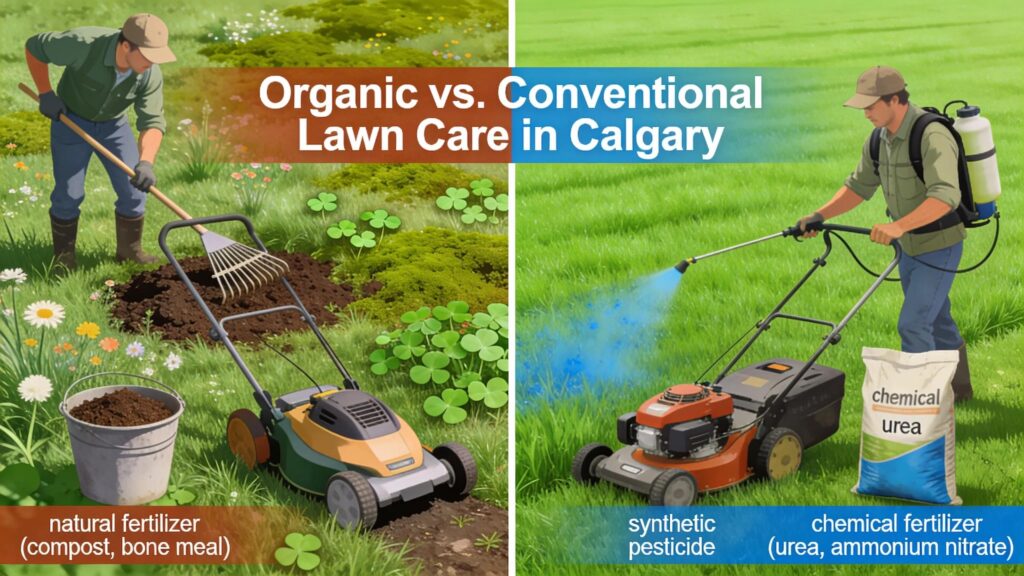
Selecting the right lawn care approach affects both turf health and the surrounding environment. Calgary’s climate creates specific demands, so treatments must be adaptable. This article compares organic and conventional fertilization and pest control, summarising benefits, trade-offs and environmental effects. Use this guidance to select the best lawn care service for your needs.
Key Takeaways
Organic lawn care uses natural fertilizers and pest control, promoting long-term soil health and ecosystem balance.
Conventional lawn care relies on synthetic chemicals for rapid growth and pest control but may harm soil and environment.
Organic fertilization enhances beneficial microbial activity, improving soil fertility and lawn vitality over time.
Conventional pest control provides quick results but poses risks of chemical runoff and environmental pollution.
Organic methods prioritize safety for families and pets by minimizing harmful chemical exposure.
Calgary’s climate requires adaptable lawn care practices suited to seasonal temperature and moisture variations.
Professional lawn care services in Calgary offer tailored organic and conventional treatments for optimal lawn health.
Organic lawn care may have higher initial costs but offers sustainable benefits and reduced long-term maintenance.
Lawn aeration supports both organic and conventional care by improving soil compaction and nutrient absorption.
Differences:
Organic and conventional lawn care differ chiefly in fertilization and pest control. Understanding these differences helps you choose the approach that fits your lawn’s needs and priorities.
Fertilization:
Organic fertilization uses compost, manure and natural minerals to build soil health and stimulate beneficial microbes, improving long-term soil viability. Conventional fertilization relies on synthetic chemicals that supply nutrients quickly but can degrade soil structure over time. As a result, organic products support lasting soil fertility while conventional options deliver faster growth.
Pest Control:

Organic pest control prioritizes safety for children and pets by using beneficial insects and plant-based repellents that reduce chemical exposure and support a healthier site. Conventional pest control often employs synthetic pesticides that act quickly but can pose pollution and health risks. For these reasons, organic pest control methods are generally the safer environmental choice.
Benefits:

Each approach delivers specific advantages depending on homeowner priorities; recognising those benefits helps guide maintenance choices for your outdoor space.
Organic Lawn Care:
Organic care improves safety for families and pets, supports biodiversity and soil resilience, and enhances lawn appearance over time through sustainable practices.
Conventional Lawn Care:
Conventional care yields faster results: synthetic fertilizers and pesticides drive quick growth and effective weed control. It can be more cost-effective initially for homeowners seeking immediate improvements.
Environmental Impacts:
The choice carries environmental consequences; assessing ecological impact is important for homeowners who prioritise sustainability.
Organic:
Organic practices typically reduce chemical runoff, foster soil regeneration and can aid carbon sequestration. They encourage beneficial insects and natural predators that help control pests and support a healthier ecosystem.
Conventional:
Conventional methods can increase chemical runoff that harms waterways and aquatic life and may contribute to long-term soil degradation, affecting both lawn health and the surrounding environment.
Expert Guidance:
Consult local specialists to tailor treatments to Calgary’s climate and soils. Choose providers experienced with both organic and conventional approaches who prioritise safety and long-term lawn health.
Leprechaun Lawns is a Calgary-based professional lawn care company specialising in comprehensive maintenance for the city’s climate. Their team delivers tailored recommendations and personalised plans for organic or conventional programmes. Visit Leprechaun Lawns for more information.
What Are the Key Differences Between Organic and Conventional Lawn Care in Calgary?
The main distinctions concern fertilization and pest control: organic methods use natural inputs to boost soil health and biodiversity, while conventional techniques apply synthetic products for faster results. Understanding this helps Calgary homeowners select the most appropriate practices.
How Do Organic Lawn Fertilizers Improve Soil Health and Lawn Vitality?
Organic fertilizers enrich soil through natural composting and support beneficial microbial life, improving both immediate turf health and long-term soil fertility.
What Conventional Lawn Care Methods Are Commonly Used in Calgary?
Common conventional methods in Calgary include synthetic fertilizers for rapid growth and chemical pesticides for pest control, chosen for their effectiveness and quick outcomes.
What Are the Benefits and Drawbacks of Organic Lawn Care for Calgary Lawns?
Organic care offers safer conditions for families and pets, greater biodiversity and improved long-term soil health. Drawbacks include slower visible results and higher upfront costs compared with conventional options.
How Does Natural Pest Control Enhance Eco-Friendly Lawn Treatment in Calgary?
Natural pest control uses biological agents like beneficial insects and plant-based repellents to limit chemical use, creating a safer environment while maintaining effective pest management.
Are Organic Lawn Care Services Effective Year-Round in Calgary’s Climate?
Organic services can be effective year-round in Calgary when appropriate seasonal practices—cover crops, targeted mulching and timing—are applied to protect turf through temperature and moisture changes.
How Does Calgary’s Climate Influence the Choice Between Organic and Conventional Lawn Care?
Calgary’s cold winters and variable moisture demand treatments adapted to seasonal conditions; select methods that align with local temperature and precipitation patterns.
What Seasonal Lawn Maintenance Practices Optimize Lawn Health in Calgary?
Seasonal best practices include regular aeration, overseeding in spring or fall, and correct watering—measures that boost growth and resilience against environmental stress.
How Does Lawn Aeration Benefit Calgary Lawns Under Different Treatment Plans?
Aeration relieves soil compaction, improves root growth and increases nutrient and water uptake, supporting both organic and conventional programmes.
What Is the Cost Comparison Between Organic and Conventional Lawn Care Services in Calgary?
Conventional services often cost less initially, but organic approaches can lower long-term expenses by improving soil health, reducing future inputs and maintenance.
How to Choose Professional Calgary Lawn Care Services for Organic and Conventional Treatments?
Choose providers skilled in both organic and conventional methods. Evaluate experience, safety practices, and the ability to deliver customised plans for your lawn.
What Credentials and Expertise Should Calgary Lawn Care Providers Demonstrate?
Look for certifications in pest management, demonstrated knowledge of local environmental practices and a proven record of successful maintenance. Familiarity with both organic and conventional systems is essential.
How Does Leprechaun Lawns Meet Diverse Client Needs With Balanced Lawn Care Options?
Leprechaun Lawns offers a full range of organic and conventional services, using local climate knowledge to provide tailored programmes that meet client goals while supporting environmental stewardship.
Frequently Asked Questions
1. How can I transition my lawn from conventional to organic care?
Transition gradually: stop synthetic fertilisers and pesticides, introduce organic alternatives, assess and improve soil with compost and mulch, and encourage diverse plantings and beneficial insects. Expect gradual visible change; the long-term gains in soil health and biodiversity justify the wait.
2. What specific organic products should I use for fertilization?
Use compost, well-rotted manure, seaweed extract or bone meal. Compost supplies balanced nutrients and improves structure; manure adds nutrients and microbes; seaweed provides micronutrients and acts as a biostimulant. Select products to match your lawn’s nutrient needs and follow application instructions.
3. Are there any specific pests in Calgary that organic methods struggle to control?
Some pests—grubs and certain beetles—can be harder to control organically. Measures like beneficial nematodes and diatomaceous earth can reduce numbers but act more slowly than synthetics. Monitor pests and combine cultural practices with organic tactics for better control.
4. How often should I aerate my lawn in Calgary?
Aerate at least once annually, preferably spring or early fall. For lawns with heavy foot traffic or clay soils, consider aerating twice yearly to relieve compaction and promote healthy growth.
5. Can I mix organic and conventional treatments effectively?
Combining organic and conventional treatments can work if planned carefully. Time applications to avoid adverse interactions, use organics to build soil while applying conventionals for immediate control, and follow label guidance. Consult a professional to design a compatible programme.
6. What are the long-term cost benefits of choosing organic lawn care?
Organic care often reduces long-term costs by enhancing soil health, improving moisture retention and lowering the need for frequent inputs. Although upfront costs may be higher, improved resilience and fewer treatments can cut future expenses.
7. What should I look for in a professional lawn care service in Calgary?
Choose a service with expertise in both organic and conventional methods, relevant certifications and a strong record of results. Assess their safety protocols, transparency, and readiness to provide customised plans. Customer reviews can confirm reliability.
Conclusion
Knowing the differences between organic and conventional care helps Calgary homeowners balance lawn health with environmental responsibility. Organic methods support ecosystem health and safety, while conventional options deliver faster visual results. Consider professional, tailored services to achieve the right balance for your lawn.